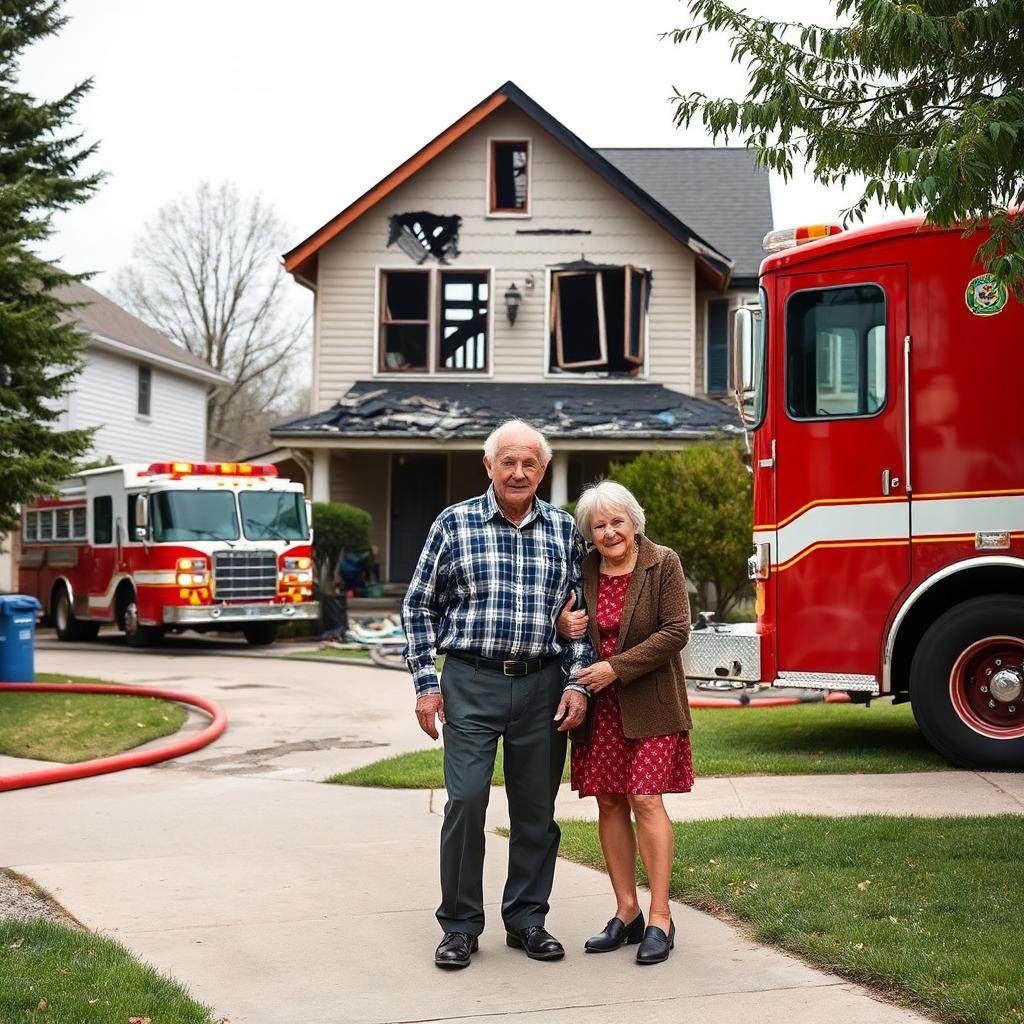
Depending on their location, senior homeowners in California may be plagued by wildfires, earthquakes, floods, coastal erosion, mudslides, and other environmental disasters. In the Los Angeles area alone, one insurance company received more than 13,000 claims from property owners for damage caused by the 2025 wildfires.
While wildfires primarily threaten the residents of rural communities, the wind can carry burning embers for miles. As residents of Los Angeles County learned, embers can destroy homes that a wildfire never reaches.
Older Americans are disproportionately the victims of property damage caused by wildfires. A 2025 report by the Department of Agriculture notes that “the proportion of older people living in places with more wildfire risk is higher than in the population at large.” The report suggests that the desire to “age in place” explains why the increasing risk of wildfires has not motivated more seniors to move to a safer location.
Older Americans are also moving to places that are at risk of wildfires in disproportionate numbers. The report attributes 87% of recent population growth in places with moderate-to-high wildfire risk to people over the age of 60. This may be due to a preference to live in the rural areas that are most vulnerable to wildfires.
Hidden Hazards in Fire-Damaged Homes
When fire damage has not destroyed a home, repairs and restoration can be challenging. Hidden structural damage might leave a home at risk of collapsing in a strong wind. Even if the home is structurally sound, particles carried in smoke, soot, and ash can contaminate homes with toxic substances, including asbestos, lead, and benzene.
Smoke from burning buildings is particularly dangerous. Houses contain metals and chemicals that are safe until they burn. Extreme heat turns the ordinary contents of houses into toxic gas. When fires burn plastics, building materials, and household goods, they leave behind hazardous particles that become embedded in insulation, fabrics, the grout between tiles, HVAC systems, porous woods, and other parts of the home.
The toxic particles that settle into fire-damaged homes can have serious health consequences. Homeowners who return to property that has not been thoroughly decontaminated are at risk of breathing carcinogenic substances into their lungs. Volatile Organic Compounds (VOCs) can linger on walls and other surfaces for months before off-gassing exposes residents to dioxins, formaldehyde, and other dangerous substances. Older adults may be particularly vulnerable to VOC exposure because of weakened immune systems, reduced respiratory function, and increased time spent indoors.
When Is It Safe to Return?
Seniors who have owned a home for years will naturally be anxious to return as soon as they can after the wildfire danger has passed. Yet smoke damage can render a home unsafe until it has been completely decontaminated.
Unfortunately, insurance companies are not always concerned about the safety and well-being of their policy holders. As the New York Times points out, California has adopted no statewide standard that specifies how homes should be tested and cleaned to make them safe for occupancy.
The absence of standards has placed insurance companies in the default position of deciding whether testing is necessary, what tests should be conducted, and how much cleaning is required before the house is reoccupied. Insurance companies may have a contractual obligation to pay for repairs and restoration of fire-damaged property, but they have a financial incentive to pay as little as possible.
California has taken legal action against the California FAIR Plan (a state-supported insurer that offers fire insurance when the private market decides that a property is too risky to insure) for its denial of smoke claims. State Farm is under investigation for its handling of smoke claims in Los Angeles County.
The insurance industry’s treatment of smoke claims became a headline issue after Farmers Insurance stopped paying for a family’s lodging, forcing them to return to their smoke-damaged home. The family retained a consultant who found dangerous levels of lead in the home, but the insurer refused to credit that finding. Tests of their hair confirmed that family members “had been exposed to a surge of heavy metals as soon as they returned home.”
Insurance experts told the Times that the industry relies on standards that are based on “outdated or incomplete research, endorsing cleanups based only on what can be seen and smelled.” When it determines whether remediation is required, the industry relies on “science” that has not been peer reviewed, including biased studies that the industry has funded.
Proposed Legislation
Members of the California Assembly have proposed a bill, known as the Wildfire Environmental Safety and Testing Act, that would require the California Department of Toxic Substances Control to develop new standards for testing and cleaning smoke-damaged homes. The legislative goal is to force insurance companies to base decisions on unbiased science developed by a public-health agency rather than standards designed to advantage the insurance industry.
If adopted, the new law would provide a critical safeguard for the health of older Californians. Seniors in other states plagued by wildfires might want to urge their state legislators to implement science-based standards for insurers to apply when they decide whether to pay for testing and remediation of fire-damaged homes.