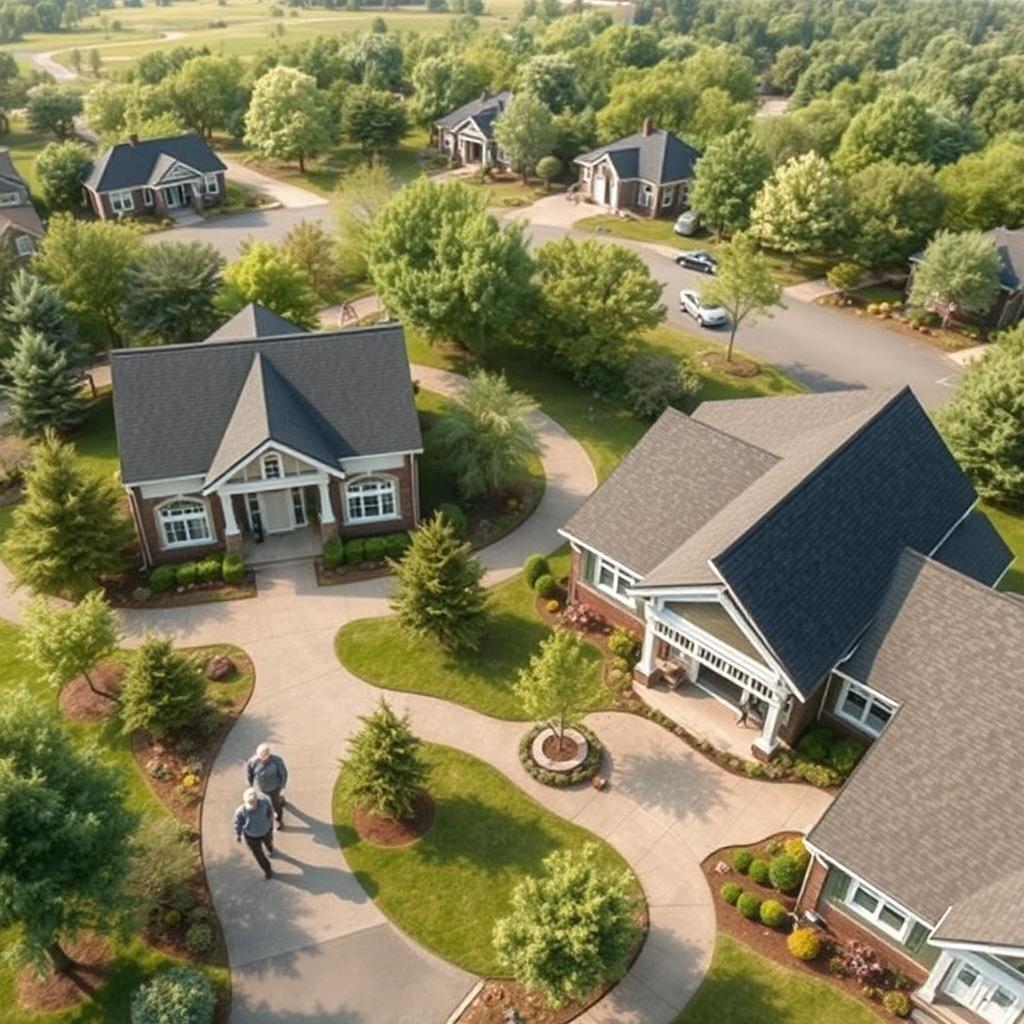
Retirement communities offer appealing housing options for older adults who are ready to downsize. After years of mowing the lawn and repairing leaky roofs, many retirees are happy to be relieved of the responsibility of home maintenance. Retirement communities give seniors the opportunity to relax as they make new friends of similar age while enjoying pickleball, par-three golf, and other amenities that are included in their community membership.
Finding the right retirement community requires a bit of research. Location, price, amenities, and access to healthcare are among the factors that older adults — often assisted by their adult children — should consider as they explore their options.
The rise of niche retirement communities has expanded the available choices. A niche community enhances the opportunity to find like-minded friends. When all residents are drawn to a community for the same reason, the odds are good that neighbors will develop friendships with each other.
Niche Retirement Communities
Traditional retirement communities emphasize relaxing environments and leisure activities. Niche communities often offer the same benefits while focusing on features that traditional communities might not regard as important.
A niche retirement community is designed to appeal to residents who share the same interests or lifestyles. Seniors who enjoy horseback riding, Jimmy Buffet singalongs, or Zen-inspired mindful aging can opt to live in communities that emphasize and enable those pursuits.
Niche retirement communities may focus on seniors who practice the same religion, share the same culture, have the same sexual identity, or express the same political viewpoints. A letter carrier’s community allows retired postal employees to get off their feet while swapping stories with seniors who shared the same career. More than one hundred university retirement communities are incorporated into college campuses, making educational opportunities available to seniors whose minds have never stopped growing.
Some popular niche communities resemble artists’ colonies, offering opportunities to paint, create pottery, or perform in plays. A community in Tennessee promotes “a simple lifestyle of cooperation” by encouraging residents to help each other construct their own cabins. Physical fitness communities employ personal trainers to help residents navigate exercise equipment and master age-appropriate exercises.
Niche Communities vs. Diversity
Many seniors in search of new housing will maximize their comfort by living with people of a similar background. Others might find little appeal in living with seniors who share the same political opinions, employment backgrounds, or lifestyles.
While some Americans have a negative view of diversity, others embrace it. Retirement communities that welcome all residents, regardless of their cultural heritage or interests, provide opportunities for seniors to enrich their lives by meeting neighbors who will share different experiences and viewpoints.
For some seniors in search of retirement housing, a welcoming attitude toward diverse residents may be essential. While there are at least 21 dedicated LGBTQ retirement villages and senior housing developments in the United States, they tend to be concentrated on the East and West Coasts. A gay senior in the Midwest who doesn’t want to relocate may be drawn to a retirement community that adopts inclusive policies to assure that every resident can live openly and authentically.
Some retirement communities have adopted diversity, equity, inclusion, and belonging (DEIB) initiatives to assure that no residents feel excluded from participation in community events. Initiatives include broadening menus to appeal to members of different cultural backgrounds, celebrating diverse religious and cultural holidays, and organizing events that encourage residents of different backgrounds to interact with each other.
Of course, inclusive retirement communities can also give like-minded residents a chance to organize activities — such as Jimmy Buffet singalongs — that may not appeal to other residents. The point of diversity is not to force every resident to participate in the same activities, but to give every resident an equal opportunity to enjoy a rich and meaningful life during their retirement years.